


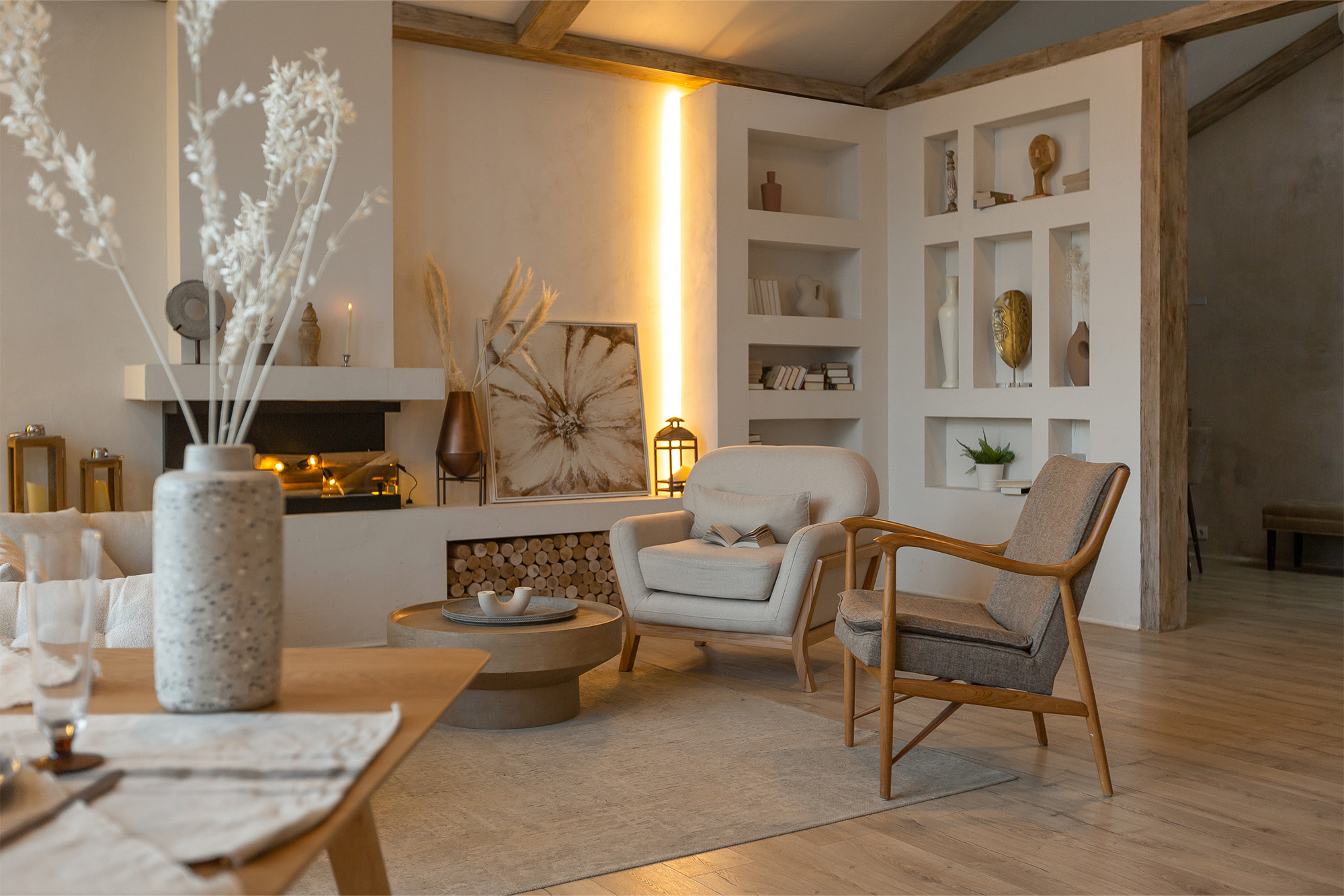
When you update your flooring, you want the finished room to feel connected rather than like a collection of unrelated design choices. Your cabinets, wall colors, furniture, doors, and trim all influence how hardwood flooring looks in your home. By considering these existing finishes before selecting a floor, you can create a balanced interior that feels intentional and comfortable.
Begin by exploring hardwood flooring options that suit your preferred style. If you are updating connected rooms with different flooring needs, you can also review luxury vinyl flooring styles to consider how the materials may complement each other.
Look at the Undertones in Your Room
Two finishes can appear similar at first glance but have different undertones. Some wood surfaces look warm with hints of gold, red, or brown, while others have cooler gray or muted brown tones. When these undertones clash, the room can feel less coordinated even if the individual materials look attractive.
Look closely at your cabinets, furniture, and other permanent finishes. You do not need to match every wood surface exactly. Instead, aim for complementary undertones that allow the different elements to work together naturally.
Balance Light and Dark Finishes
The contrast between your flooring and surrounding finishes can influence the character of a room. Light hardwood can create a fresh appearance alongside darker cabinets or furniture. Darker hardwood can provide definition in a room with lighter walls and furnishings.
Consider the amount of natural light the room receives, too. In a smaller space with limited daylight, a lighter floor may help create a more open visual impression. In a bright room, you may have greater flexibility to explore deeper shades. Your wall color and lighting choices will also affect the final result.
Coordinate With Cabinets and Countertops
If you are updating a kitchen or another space with built in cabinetry, pay particular attention to how the floor relates to the cabinets and countertops. When the floor and cabinets have very similar colors and patterns, they may blend together without much definition.
You can create contrast by choosing finishes that differ in depth or tone while still sharing complementary undertones. If your countertops have noticeable veining or patterns, a simpler hardwood appearance may help keep the overall design balanced.
Think About Texture and Pattern
Color is important, but texture also influences how your finishes work together. Hardwood with prominent grain patterns can add character to a room, while a more subtle grain may suit an interior with detailed furniture, patterned fabrics, or decorative surfaces.
Take a step back and consider the room as a whole. If several elements already draw attention, a quieter flooring design may help balance the space. If your furnishings are simple, a more distinctive wood grain can become an attractive feature.
View Samples in Your Own Space
Lighting can change how hardwood flooring appears throughout the day. A sample that looks warm in a showroom may appear different beside your cabinets or under your home's lighting. Place samples near the finishes they will sit alongside and view them in natural daylight as well as in the evening.
This simple step can help you identify combinations that work well before making a final decision.
Create a Cohesive Interior
Pairing hardwood flooring with existing finishes is about finding the right balance of color, contrast, and texture. When you consider these elements together, you can choose a floor that complements your home's character without making every surface look identical.
If you are planning a flooring update in Hummelstown or Goldsboro, contact Couch Potato Carpet And Flooring to explore hardwood flooring options for your space.


